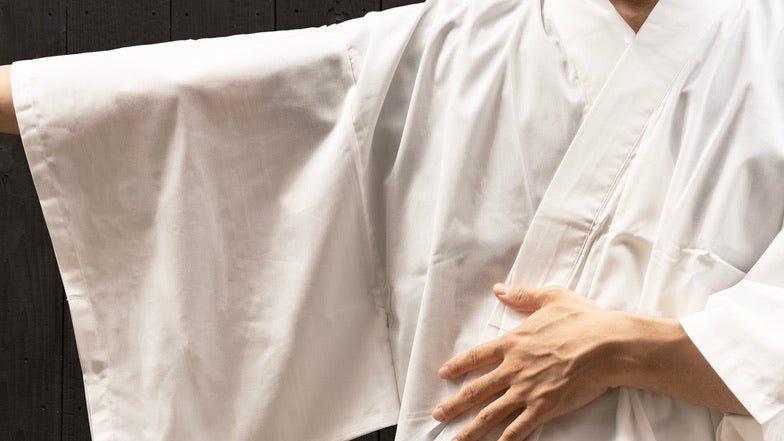
How Do You Choose Women's Tokudo Houi? Length, Yuki, Garment Width, and Consulting About Hakue and Juban Sizes
Preparing for Tokudo as a woman starts with confirming the measurements that fit your body and what is specified
"Will it fit if I choose the women's version?" "Is it all right to decide the size by height alone?" When you are getting your Houi ready for the first time, you may be unsure even after looking at the measurement chart.
For women's Tokudo Houi, confirm what is specified for your denomination and the stage of the program you will attend, and choose by length, Yuki, and garment width, and by how it feels to wear with the Hakue and Juban layered. Rather than deciding by gender or height alone, let us look one by one at whether a ready-made size fits or whether you need to consult about measurements.
This article summarizes how to choose a size, for women who are getting Houi and Hakue ready for Tokudo for the first time. For the items you need, their form, and how to wear them, the guidance from your denomination or the organizer takes priority. At Naoshichi, you can consult us about supplies and measurements. For the formal application for Tokudo and the conditions for receiving it, please ask the temple you belong to or the organizer.
What to confirm first is the denomination, the purpose, and the date of use
Even within the same Tokudo preparation, the guidance can differ among training sessions, Shurai, and classes at a seminary. First look at the list of items to bring that you have on hand, and think separately about "the items specified" and "your concerns about size."
- Denomination and stage of the program: which denomination, and what you will take part in.
- Items specified: the names of items such as Kokue, Hakue, and Juban, and their color, form, material, and quantity.
- The first day of use: take the season into account, and also allow for the days needed after you receive the items to check how to wear them.
- Items you already have: those you can use, those whose measurements concern you, and those you newly need.
If you are preparing within the Hongwanji-ha, please compare the steps up to Tokudo with the guidance you yourself received. It is safer not to turn another person's belongings, or a set from another school, directly into your shopping list.
Look not only at length, but also at how much room there is when layered
Even when height is the same, shoulder width, arm length, and chest and hip circumference differ from person to person. Treat the size as a guide for narrowing down your options, and check each product's measurements and how it looks when worn.
| What to look at | What to confirm | Information useful for the consultation |
|---|---|---|
| Garment length and hem | The length once dressed, and how manageable the hem is when walking or sitting | Your height, any difficulties with the length of your current garment, and how you look in it from head to toe |
| Yuki and sleeves | Where the sleeve opening sits when you move your arms, and how it overlaps with the Hakue and Juban | Where it feels long or short. If you have items of your own, their measurements. |
| Garment width and front overlap | Whether the chest and hip area are free of strain, and whether the front tends to open when you sit | Places that tend to feel tight in your everyday clothes, and how it looks when worn |
| Neckline and layering | How the collar sits when the Hakue and Juban are layered, and any pulling at the shoulders or sides | The types and sizes of the items worn together |
| Obi and Tabi | The length of the Obi and how it is tied, and how the Tabi feel on the feet | The measurements of the actual Obi, and any concerns such as your actual foot size or width |
Measurements taken on the body and measurements taken with a garment laid flat are different things. Rather than deciding on your own where to measure or how much room to allow, ask "which measurement of which item is needed" before you measure. Please also consult us before you cut or re-sew any Houi you already own.
Do not decide on the form by the "women's" label alone
Even when a women's size exists, the same form and way of dressing will not necessarily suit everyone. Hakue and Juban also differ in construction, so we look at each product individually.
Check the Miyatsuguchi separately from the measurements
If you are concerned about the construction at the sides or the sleeve attachment, such as the Miyatsuguchi, please tell us which product your consultation is about. Rather than assuming that "a woman must wear this form" or that "this form can be used in any denomination," we compare what the organizer specifies for attire with the product's specifications. Also, whether a Miyatsuguchi is present does not by itself tell you whether the length or garment width will fit.
If you are unsure how to wear it, please try layering the actual items and practicing, following what is specified by the program you will take part in and the way of wearing you were taught. If you tell us specifically which areas concern you, it becomes easier to tell whether the issue is one of measurements or of dressing.
For Hakue and Juban, check the measurements of each
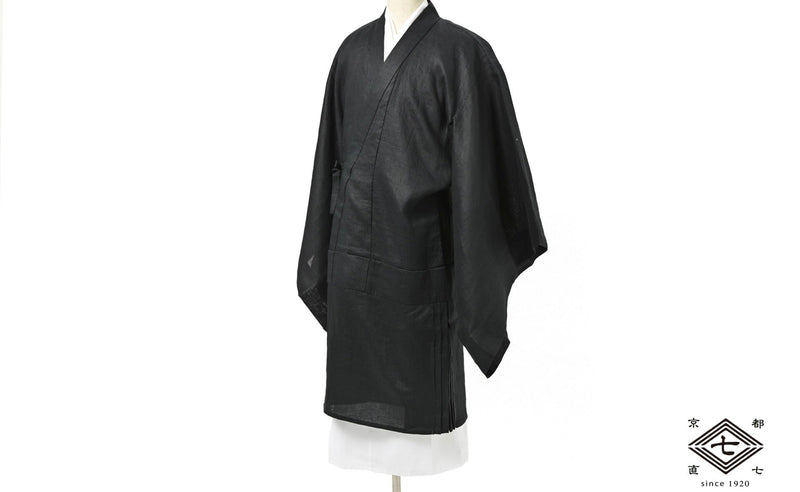
Naoshichi's Hakue and Juban set (one of each) comes in between-season/summer and between-season/winter versions. The women's Hakue is available in sizes S, M, L, and LL. The women's Juban to be combined with it comes in one size. Even when the size of the Hakue fits, the Juban does not necessarily fit as well.
If you fall outside the height guide, are concerned about the garment width, or need different measurements for the Hakue and the Juban, please consult us before ordering. First we check whether you can wear a ready-made combination without strain. If the item needs to be made to order or adjusted, we will look at the item and the measurements and then tell you individually whether it can be done, the cost, and the turnaround time.
Choose the fabric to suit when and where you will use it and what the organizer specifies. If heat or show-through is a concern, think about what you wear underneath as well. For prices, stock, and the size chart, please see the latest information shown on the product page.
When it arrives, check it layered the way you will wear it on the day of use
- □ Item name, season, size, and quantity match the order.
- □ I tried on the Juban, Hakue, Obi, and other items for the day of use, all together.
- □ I checked whether the hem or the front overlap causes trouble when standing, walking, and sitting.
- □ I moved my arms and checked for pulling at the shoulders and sides and for how the sleeves overlap.
- □ I checked how the neckline sits and how it feels with the Obi tied.
- □ I noted any areas of concern and consulted before using the item or making any changes to it.
If an exchange or a size alteration seems to be needed, please check the conditions at the time of your order and then contact us. Because what we can do after a try-on differs by case, please do not alter or wash the item before contacting us.
Frequently asked questions
If there is a women's size, can I choose by height alone?
Height is a guide. We also look at garment width, Yuki, and how the garment combines with the Juban you layer with it. If your height falls at the boundary between sizes, or if there are places that tend to feel tight, please consult us before ordering.
Do women always choose one with a Miyatsuguchi?
There is no fixed answer. You choose by looking at what your denomination or the program you will attend specifies, and at the respective specifications of the Hakue and the Juban. If you do not know what is specified, please ask the organizer first.
Will buying a larger size give me peace of mind?
If there is too much room, the length, sleeves, and front overlap can become harder to manage. Please consult us about the measurements, including the amount of room you need.
Can I consult you even from far away?
Yes. Please let us know on LINE the purpose, the date of use, your height, and the areas you are having trouble with. If measurements or photos are needed, we will let you know which parts we would like to see. There are also cases where we cannot tell from photos alone and need to see the actual item.
If you do not know a measurement, it is fine to consult us anyway
Please copy the note below and send it to us, filling in what you know. You do not need to send photos of your body from the start. Even when you do send photos, you do not need to include your face or personal information.
This is a size consultation for women's Tokudo Houi.
Denomination and what I will attend:
First date of use:
Items specified:
Height:
Items I already have and their sizes:
Areas of concern (length, sleeves, garment width, neckline, etc.):
Products I am considering:
Budget and preferences:
Consult Naoshichi about measurements on LINE
If you are considering a full set, please see the Tokudo supplies set. Make use of what you already have that is sufficient, and gather only the items you need.
We accept orders from outside Japan.
Ordering from outside Japan | Contact us (we reply in English)